
Parashat Vayera summary
Vayera is one of the most dramatic portions in the Torah. It shows Avraham at his kindest and his bravest, and gives us the passage read on Rosh Hashanah: the Akedah.
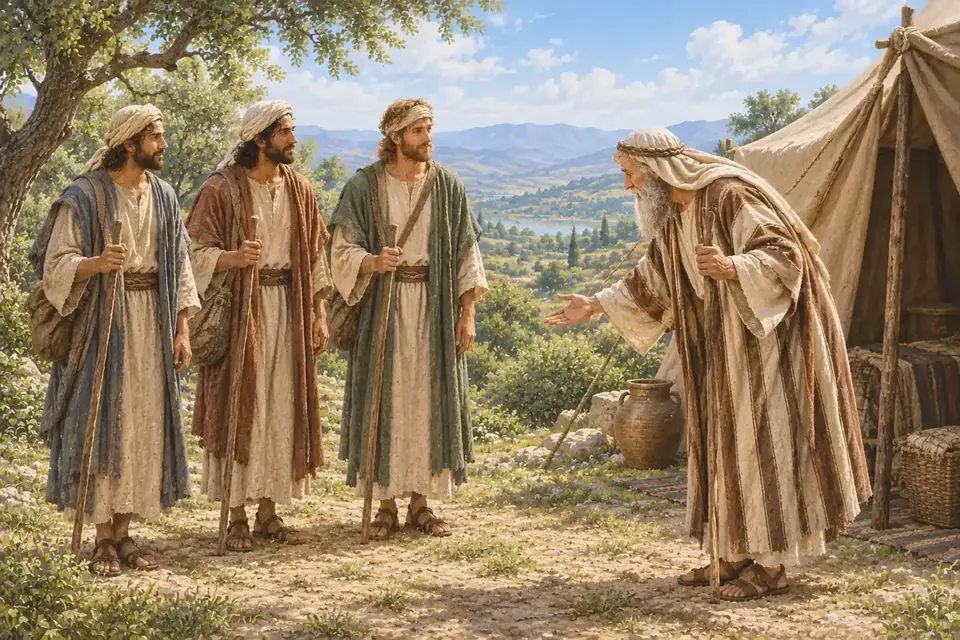
Three guests in the heat of the day Genesis 18:1–15
“And Hashem appeared unto him by the terebinths of Mamre, as he sat in the tent door in the heat of the day.”Genesis 18:1
Rashi explains that G-d came to visit Avraham on the third day after his circumcision. This is the source of the mitzvah of bikur cholim, visiting the sick. Even so, when Avraham sees three travelers he runs to greet them, then serves bread, a tender calf, butter and milk. This is hachnasat orchim, welcoming guests. One guest announces that Sarah will have a son by the same time next year. Sarah, listening at the tent door, laughs to herself. “Is any thing too hard for Hashem?”
Avraham speaks up for Sodom Genesis 18:16–33
G-d shares His plan to judge the wicked cities of Sodom and Amorah. Avraham, who calls himself “but dust and ashes,” pleads for them: “Shall not the Judge of all the earth do justly?” Fifty righteous people… forty-five… forty… down to ten. G-d agrees to spare the city for ten. But there are not ten.
Escape from Sodom Genesis 19
Two angels arrive in Sodom, and Lot insists on hosting them, but the people of the city surround his house. At dawn the angels urge Lot to flee. When he lingers, they take his hand and lead him out, “Hashem being merciful unto him.” They warn, “look not behind thee.” Fire and brimstone fall on Sodom and Amorah. Lot’s wife looks back and becomes a pillar of salt.
Avraham and Avimelech Genesis 20
In Gerar, Sarah is again presented as Avraham’s sister, and King Avimelech takes her. G-d warns Avimelech in a dream, and he returns Sarah with gifts. Then Avraham prays for Avimelech, and his household is healed. Rashi notes that right after this Sarah conceives. As the Talmud teaches, one who prays for someone else while needing the same thing is answered first.
Yitzchak is born Genesis 21:1–8
“And Hashem remembered Sarah as He had said.” Avraham is 100 years old when Yitzchak (Isaac) is born, and his name comes from the root for laughter. Sarah says, “G-d hath made laughter for me; every one that heareth will laugh on account of me.” Yitzchak is circumcised on the eighth day, and Avraham makes a great feast when he is weaned.
Hagar and Yishmael in the desert Genesis 21:9–21
Sarah sees Yishmael acting in a way that worries her and asks Avraham to send him and Hagar away. Avraham is deeply troubled, but G-d tells him to listen to Sarah. In the wilderness their water runs out, and Hagar weeps. G-d hears the boy “where he is.” Rashi explains that he was judged by who he was at that moment. A well appears, and Yishmael grows up to be an archer.
The well of the oath Genesis 21:22–34
Avraham and Avimelech make a covenant. Avraham gives seven ewe-lambs as a witness that he dug a disputed well, and the place is named Be’er Sheva, the well of the oath (or of the seven). Avraham plants an eshel there and calls in the name of Hashem. The Sages describe the eshel either as an orchard or as an inn for travelers.
The Akedah: the binding of Yitzchak Genesis 22:1–19
“Take now thy son, thine only son, whom thou lovest, even Isaac… and offer him there for a burnt-offering upon one of the mountains which I will tell thee of.”Genesis 22:2
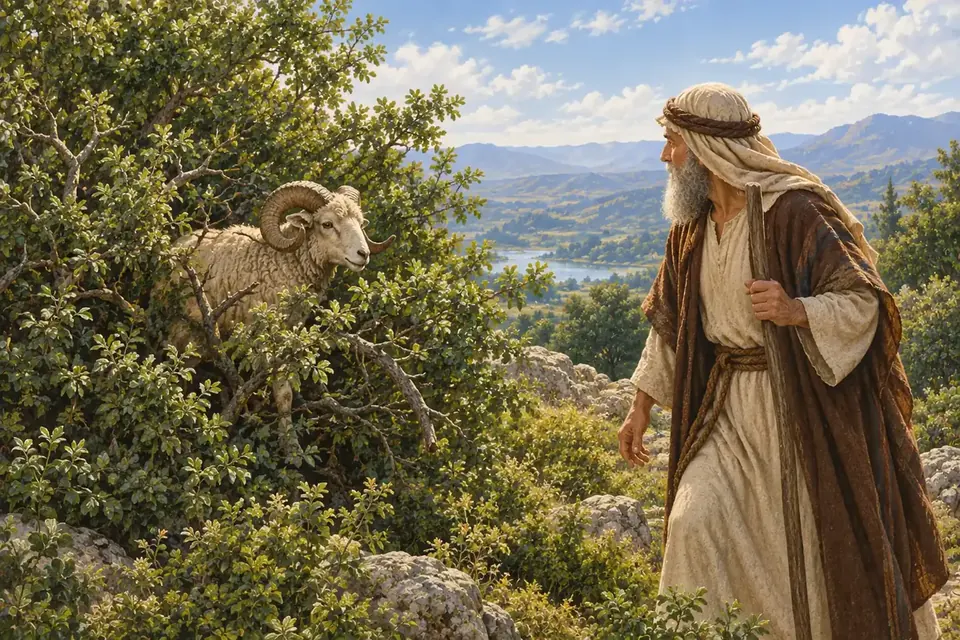
G-d tests Avraham, who answers Hineni — “Here am I.” Early in the morning, Avraham and Yitzchak travel three days to the land of Moriah. When Yitzchak asks where the lamb is, Avraham answers, “G-d will provide Himself the lamb.” Twice the Torah says “they went both of them together.” At the last moment an angel calls out, “Lay not thy hand upon the lad.” Avraham sees a ram caught in a thicket by its horns and offers it instead. G-d blesses Avraham’s descendants to be as many as the stars of the heaven and the sand on the seashore. Mount Moriah is later identified as the site of the Holy Temple.
News from Nachor’s family Genesis 22:20–24
The parsha ends quietly, with news of Avraham’s brother Nachor’s family. Among them is Betuel, father of Rivka (Rebecca), who will become Yitzchak’s wife in the next portion, Chayei Sarah.
Key Hebrew words in Parashat Vayera
You don’t need to know Hebrew to learn Torah, but a handful of key words opens up the text. These are some of the words Lavi teaches in Vayera, each with its pronunciation and audio in the app.
Big ideas in Parashat Vayera
- Welcoming guests is holy. The Talmud (Shabbat 127a) learns from Avraham that hospitality is even greater than receiving the Divine Presence.
- Speak up for justice. Avraham argues on behalf of strangers in Sodom, even before G-d.
- Pray for others. Avraham prays for Avimelech and is answered for himself.
- Hineni: be fully present. Avraham answers G-d, his son and the angel with the same word.
- The Akedah lives on. It is read on Rosh Hashanah, and the ram’s horn recalls the ram of the Akedah. The Talmud (Rosh Hashanah 16a) says G-d asks for a ram’s horn “so that I may remember for you the binding of Isaac.”
Questions to think about and discuss
- Avraham ran to welcome strangers on a hot day while he was recovering. What makes someone feel truly welcome?
- Avraham argued with G-d to save people he didn’t know. When is it right to speak up?
- What does Hineni, “here am I,” mean to you? Who needs you to be fully present?
- Why do you think the Torah repeats “they went both of them together”?
These work well at the Shabbat table, with a chavruta (study partner), or on your own. Have a question of your own? You can ask Torah Chat in the Lavi app, and for practical halachic questions, ask your rabbi.
Parashat Vayera: frequently asked questions
What is Parashat Vayera about?
Parashat Vayera (Genesis 18:1–22:24) includes Avraham welcoming three guests, the promise of a son to Sarah, Avraham’s plea for Sodom, the escape of Lot, the birth of Yitzchak, Hagar and Yishmael in the desert, the covenant at Be’er Sheva and the Akedah, the binding of Isaac.
What is the Akedah?
The Akedah (“binding”) is the story in Genesis 22 in which G-d tests Avraham by commanding him to offer his son Yitzchak on Mount Moriah, and then stops him through an angel. A ram is offered instead. The Akedah is read on Rosh Hashanah.
Why do we blow a ram’s horn on Rosh Hashanah?
The Talmud (Rosh Hashanah 16a) connects the shofar made from a ram’s horn to the ram Avraham offered in place of Yitzchak, recalling the Akedah and Avraham’s devotion.
How can I learn Parashat Vayera?
Take it one scene at a time, learn key words like chesed, hineni and Be’er Sheva, and discuss the big questions. Lavi teaches Vayera in 18 short, illustrated lessons with audio, quizzes and Torah Chat.